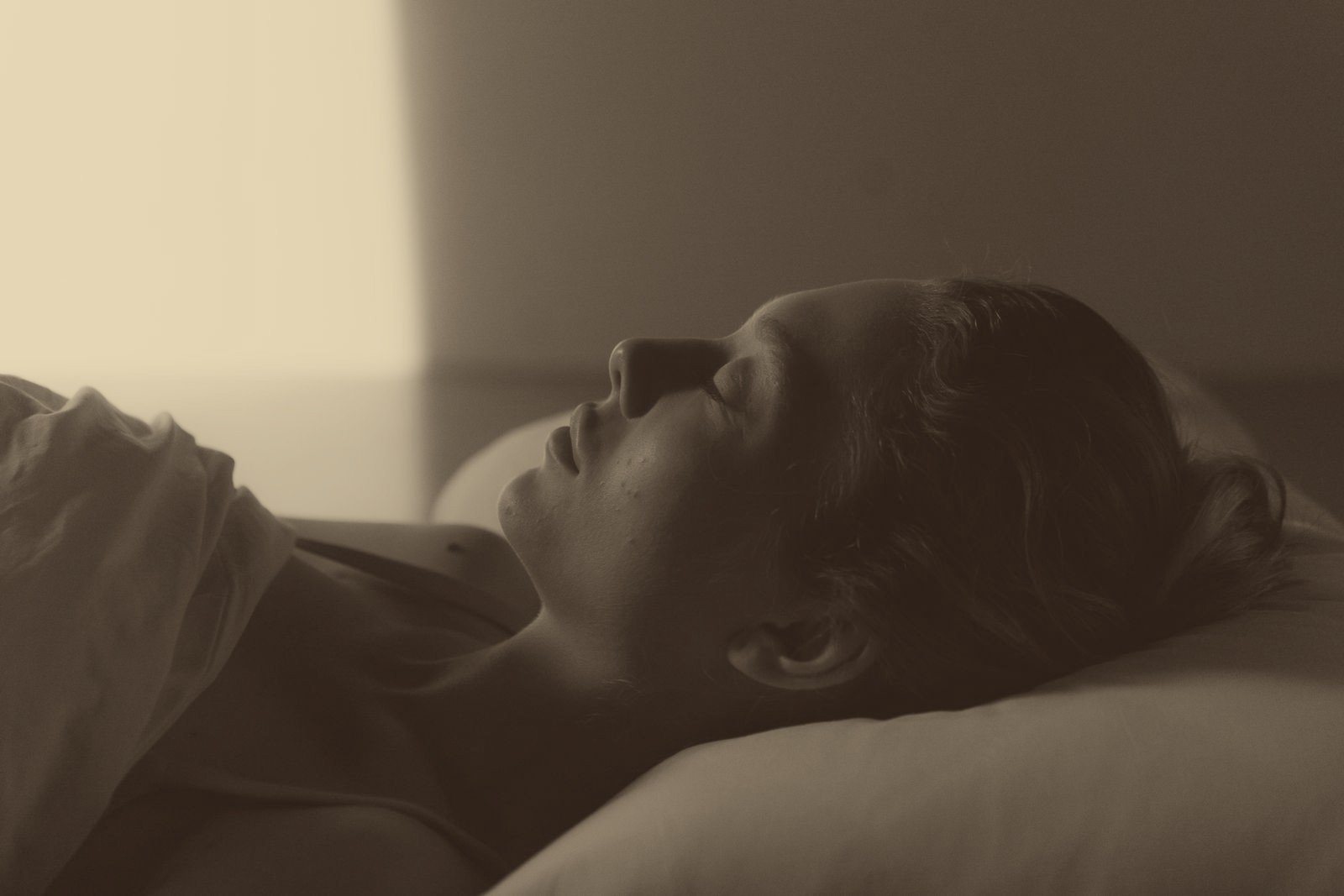
Three breakdowns and a service dog who saw each one coming before I did — what nervous-system dysregulation actually feels like from the inside, and what the neuroscience can and can’t tell you about healing it.
Content note: this piece discusses suicidal ideation.
The Year It Broke
This year, something finally clicked.
I realised the root cause of my health issues — physical and psychological both — has always been a dysregulated nervous system. It’s wild to think I missed something so central for so long. The signs were there for decades. But when you’re constantly just trying to survive, it’s easy to overlook the deeper pattern underneath.
The turning point came during a particularly dark stretch. My PTSD, depression and suicidal ideation were at their worst. For most of last year, I was unwell. And by unwell, I mean:
- persistent suicidal ideation
- barely eating
- leaving the house only for an hour a day
- extreme brain fog
- forgetfulness
- sadness, anger, physical pain
Then came the seasonal shift in London, warm to cold. That transition hits me hard every year. This time it broke me. I had a complete meltdown in a public park — the cold, the dread, the internal chaos, my body simply unable to hold it anymore. My nervous system was on fire.
When you’re in that state, relaxing feels impossible. And I say that as someone who should know how — I’m a trained, qualified tantric yogini. I’ve spent years learning to master my breath, body and mind, and still: when my nervous system is properly dysregulated, no amount of stretching, meditating or breathing brings me back down on its own. Those practices help — they’re some of the only things, besides my assistance dog, that do. But lasting change meant going deeper. Going inside the mind and rewiring from the roots.
Reading the Signals
So I dived into somatic healing and nervous-system regulation, and started really getting to know my “disorders” — not as labels, but as signals. Messages. A roadmap I’d never bothered to read properly before.
There’s a belief that the brain loses its ability to change as we age — that neuroplasticity fades completely. That’s not quite right. Plasticity does shift with age; it’s not as fast or effortless as it is in childhood. But the capacity itself never disappears. The brain can still form new pathways at any age. We’re never too old, too broken, or too far gone to heal.
Habits, behaviours, personalities — all of it comes from routes our brain takes again and again. We can change those routes. It takes work, but it’s possible. What’s helped me: CBT, DBT, mindfulness, yoga, meditation, breathwork, somatics — used alongside each other, not as a single fix.
The Ring Saga
Here’s what that actually looks like in practice, on an ordinary day.
My anxiety skyrocketed out of nowhere. I felt like I was on the verge of a breakdown, drowning in overwhelming emotion — and then I noticed what was actually happening: I was stuck on an old thought loop, replaying what I’d started calling the “ring saga,” something I thought I’d already fully worked through.
The thoughts were sticky, pulling me back into feelings I thought I’d let go of. Instead of spiralling further, I caught myself: we already worked through this, girl. It’s all good now. And the grip started to loosen.
Radha noticed before I did. She could sense it rising before I was fully aware of it myself, and once I stopped resisting and let her do her thing, I started breathing deeply — the rest followed naturally. I kept breathing, consciously, giving my nervous system the signal to stand down. Then I went for a long walk, one of my go-to resets when my brain feels stuck. Radha’s support, reframing the thought, breath, movement — together, they brought me back to the present. I still felt some anxiety afterward. But it was just anxiety. No story attached to it anymore. That’s the win.
The Two-Hour Panic Attack
A different day, a bigger break.
Two hours — that’s how long it took me to manage my most recent panic attack. Looking back at the triggers, I could see the usual culprits: PTSD, anticipatory stress, and what’s often called adrenal fatigue — not a diagnosis recognised by endocrinologists, but a familiar name for what chronic stress actually does: cortisol dysregulation and burnout that leaves you running on empty. Together they brewed into something toxic, and left me shaken and completely overwhelmed.
That’s how my panic attacks usually begin — caught in a trauma loop. Flashes of memory, intrusive thoughts, surges of emotion invading without warning, wherever I happen to be. Sometimes I’m so lost in it I find myself crying without realising I’d started. My body warns me before the actual breakdown: cramping calves, a racing heart, a shorter fuse. I usually ignore every sign, because slowing down means facing the storm in my mind, and I’ll do almost anything to avoid that.
During one of these, I called the crisis team. “I can’t feel my legs or feet,” I told the clinician. The suggestion was progressive muscle relaxation — a technique I recognised immediately from years of teaching yoga. I put on a short video, lay down, and started breathing, releasing tension piece by piece.
Radha had been quietly watching the whole time. As I focused on my breath, she came over and applied pressure to my throat — trained, deliberate, exactly what she does when I’m in distress. Then she went further: sensing I was still disconnected from my body, she started playfully nuzzling my fingers and toes, until I was laughing, genuinely, seconds after I’d been sobbing. It felt like stepping into a different reality entirely.
Then she turned to a couple of journals sitting on my bedside table and nudged them, one after another, with her nose. I hadn’t written in almost two decades. It used to be how I processed things, before the pain got too big to face on the page. “Do you want me to write, Radha?” I asked her, half-joking. She gave me her enthusiastic little “yes” signal. The next morning, I sat in bed with a notebook, breathing, while she curled up beside me making her soft, contented sounds. She wasn’t just pulling me out of the loop that time. She was pointing me toward something I’d been avoiding for years.
Writing is part of my routine again now. Every time I pick up the pen, she’s there.
What the Science Actually Supports
It’s not just overthinking that keeps a feeling alive once it’s taken hold — it’s brain chemistry, and the mechanism isn’t identical across every diagnosis, even when the experience feels similar from the inside.
With BPD and CPTSD, trauma reshapes the stress-response circuitry itself: an overactive amygdala makes emotions feel more intense than the moment calls for, a weaker prefrontal cortex makes it harder to rationalise or shift focus away from them, a smaller hippocampus holds onto emotional memories as though they’re happening right now instead of in the past, and elevated cortisol keeps the whole system stuck in that state. With ADHD, the mechanism runs differently — rooted in how dopamine and norepinephrine get regulated — which is why the emotions can feel just as intense and just as hard to downshift from, without that same trauma-circuit involvement doing the work.
None of that makes any of it a character flaw. If you’ve ever wondered why you can’t just let something go, it’s not weakness — your brain is wired, for real physiological reasons, to hold on longer than you’d like. The good news is that wiring isn’t fixed. You can train it to let go, too — slowly, and not in a straight line.
Healing Is Not Linear
Healing was never going to mean never feeling anxious again, or never having an intrusive thought loop again. It means trusting myself to move through them when they show up — reminding myself I’ve already done the work, breathing through the discomfort, taking whatever action actually supports my nervous system in that moment rather than the one I think I “should” be taking.
If you’re stuck in a loop right now: pause, and remind yourself what you’ve already worked through. Breathe deeply enough to actually reach your vagus nerve, not just your chest. Let a person or an animal in your life help you regulate, if you have one. Move your body — walk, stretch, shake it out, whatever your body actually needs. And trust that the emotion will pass, the way it always eventually has before, even when it doesn’t feel like it will this time.
Every time you do that, you prove to yourself, again, that you can break the cycle. One win at a time. You’re not alone in it, your nervous system isn’t broken, and healing — slow, uneven, real — is always possible.
In healing and hope,
Karmic Rebelle
Disrupt Karma. Restore Dharma.
Leave a Reply